
Merrill Creek is often thought of just the reservoir; however, the actual Merrill Creek is the real star of the property. The NJ Department of Environmental Protection (NJDEP) has classified the Merrill Creek as an “FW2-TPC1” waterway which is a top-tier environmental classification meaning the water is an exceptionally clean freshwater habitat that supports natural trout reproduction (i.e. “TP” means “Trout Production”). Not only does the Merrill Creek provide excellent habitat for the NJ State Fish, the Brook Trout (NJ’s only native Salmonidae), but as it snakes its way from its source through the MCR property 1.4 miles to the confluence of the Merrill Creek it supports other animals, including some of NJ’s more rare species.
As like so many other stream inlets areas, this confluence of the Merrill Creek where flowing water empties into the reservoir, is an area of a highly diverse aquatic ecosystem. This zone acts as active biological hotspot due to a combination of unique physical and environmental factors.
Several key conditions make stream inlet areas highly diverse, including:
- Nutrient Influx: Streams carry sediment, organic matter, and nutrients from the surrounding watershed, providing a rich food supply that supports a thriving base of the food web.
- Oxygenation: Moving stream water mixes with the lake, creating well-oxygenated zones that are ideal for fish spawning and aquatic insect development.
- Habitat Complexity: The mixing of currents and still water creates varied structures, including sandbars, shallow flats, and sheltered vegetation, offering diverse hiding, nesting and foraging spaces for wildlife.
- Ecotone Benefits: These stream-to-lake transition zones (ecotones) allow both river-dwelling and lake-dwelling species to overlap, dramatically increasing the number of overlapping species.
Planting Native Vegetation at Confluence of Merrill Creek and the Reservoir
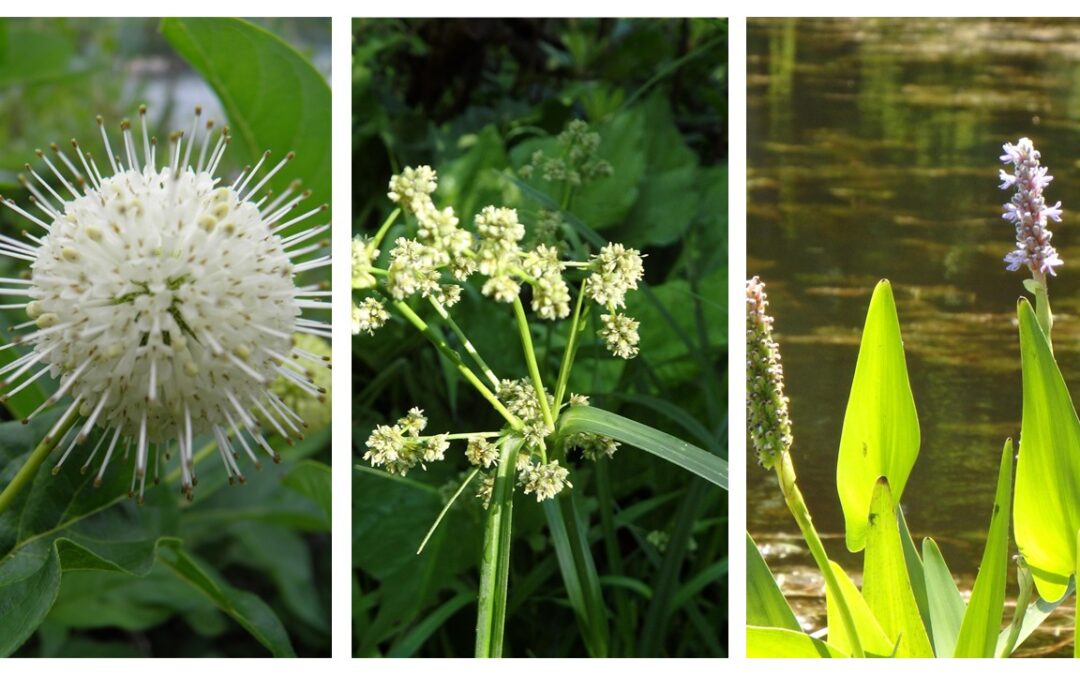
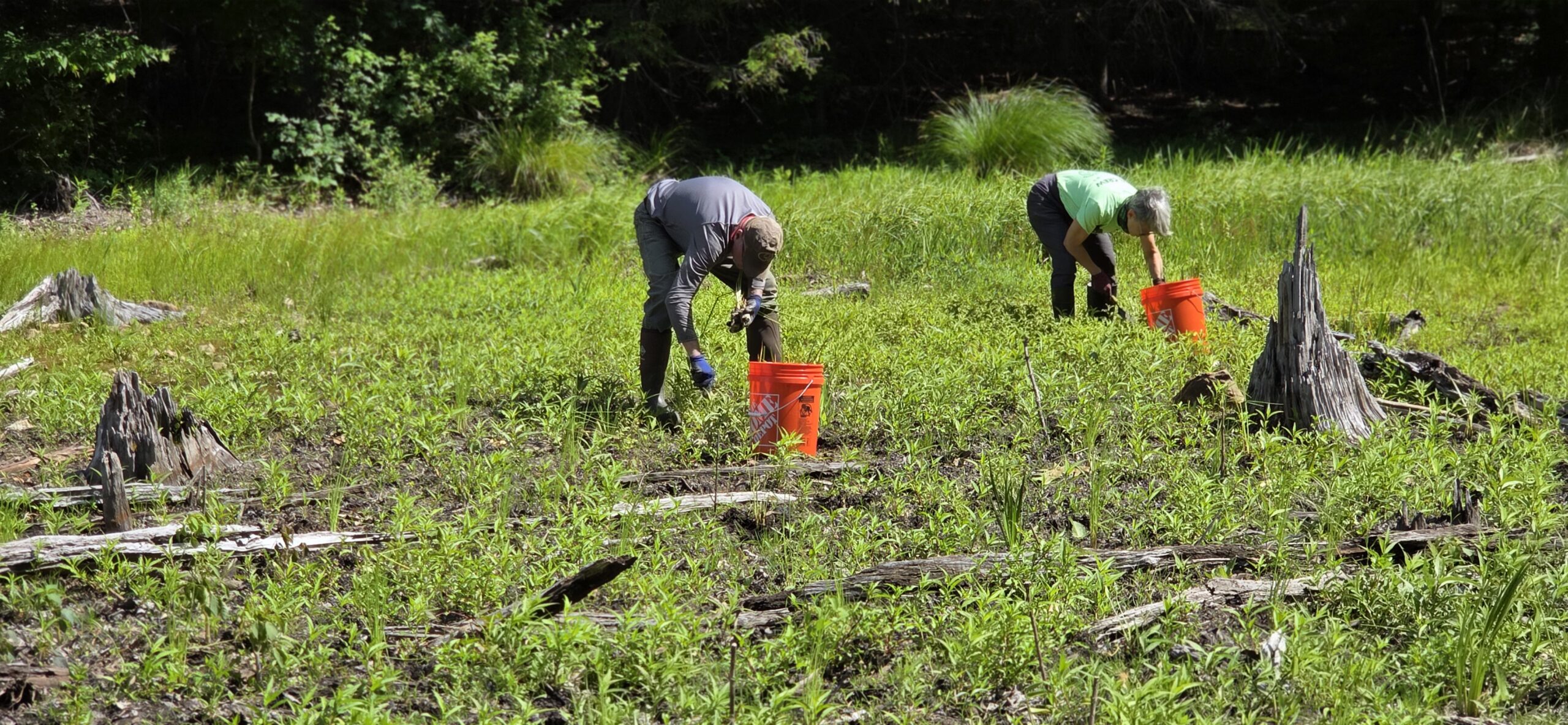
Over the past three 3 years MCR staff, with help from the MCR volunteer team, have been enhancing the area of the confluence by planting over 1,000 native herbaceous, woody wetland and aquatic plants. These native plants include Blue-flag Iris, Pickerelweed, Royal Fern, Duck Potato, Green Bulrush, Tussock Sedge, Soft-stem Bulrush and Slender Bur-reed, as well as Buttonbush.
The wetland enhancement project is helping to increase the vegetation diversity at this area with plants that offer multiple benefits for pollinators, waterfowl and other animals. Additionally, by adding native plants such as Bulrush to the area, not only does it help provide important food and cover for wildlife, but Bulrush also naturally removes excess phosphorus from water, through its root system. This use of a plant to remove the excess nutrient pollution is termed “phytoremediation.”
Excess phosphorus is a major part of nutrient pollution, which according to the US EPA, is “one of America’s most widespread, costly and challenging environmental problems.” Although, phosphorous is a natural and essential part of ecosystems, too much can pollute the water by leading algae to grow faster than ecosystems can handle. Excess algae can harm water quality by decreasing the oxygen that fish and other aquatic life need to survive. Additionally, significant increases of algae in our water can also impact human health, food resources, and thus impact a region’s economy.