
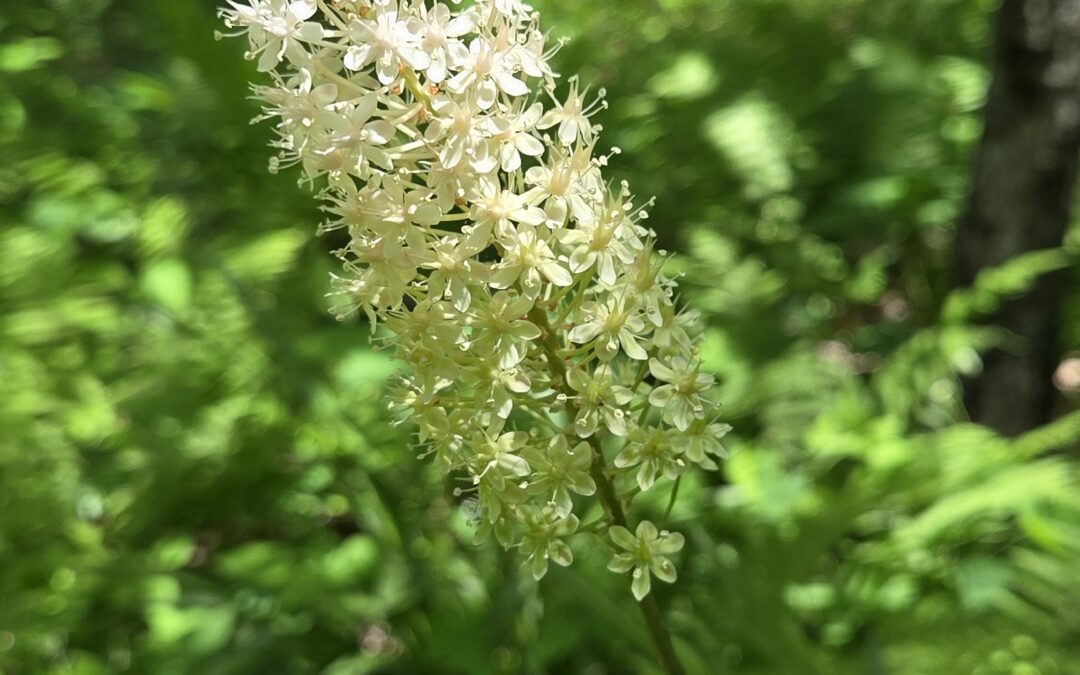
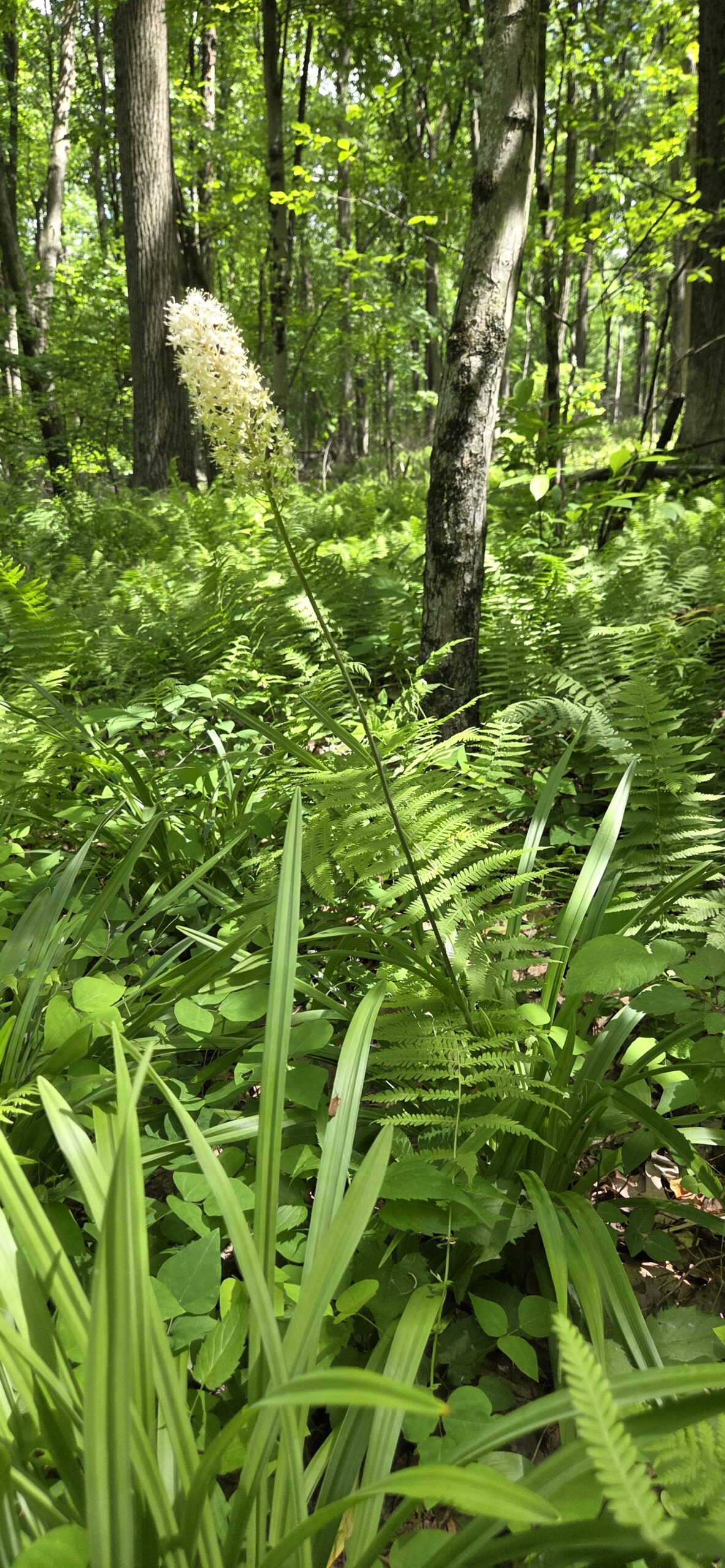
A cluster of Fly-Poison Lillies at MCR. Photo by John Parke
Between 2021 through 2022 Merrill Creek Reservoir had a Botanical Inventory performed at the property. The results of that inventory found “375 plant species, including 293 native species (78.1%) and 82 non-native species (21.9%). Additionally, the property hosts five state-listed rare plant species.”
One of the NJ rare species at MCR that is in bloom right now (June) and can be seen along some trails, is Amianthium muscitoxicum, AKA “Fly-Poison Lily.”
Amianthium is a genus of perennial monocot plants found in eastern North America. The genus contains only one species, known as Amianthium muscitoxicum (Fly-Poison). It is reported as a deer-resistant species because of its significant mammalian toxicity. Fly-Poison contains toxic alkaloids, and as such, is highly poisonous when ingested by livestock, humans and other animals.
Fly-Poison Lily is self-incompatible meaning the plant has a genetic mechanism that prevents self-fertilization, even when the pollen is perfectly healthy. It forces the plant to rely on cross-pollination from other individuals, which protects the species from inbreeding depression and boosts overall genetic diversity. Thus, it mainly is pollinated by five species of beetle, predominantly the Abbreviated Long-horned Beetle (Strangalepta abbreviata). These beetles are rewarded by nectar produced within each flower while the plant is rewarded with pollen transfer from the beetles as they move from plant to plant.
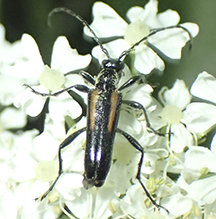
Abbreviated Longhorn Beetle. Photo by Babette Kis
Research sources suggest that Fly-Poison Lily does have a degree of fire-tolerance, as well as a positive response to canopy opening disturbance and enhanced light conditions. MCR implements both prescribed burning (RxB), and forest canopy opening disturbance (where appropriate at the property), through sound ecological forestry planning and forestry treatment prescriptions as listed in our NJ Sate approved Forest Stewardship Plan.