
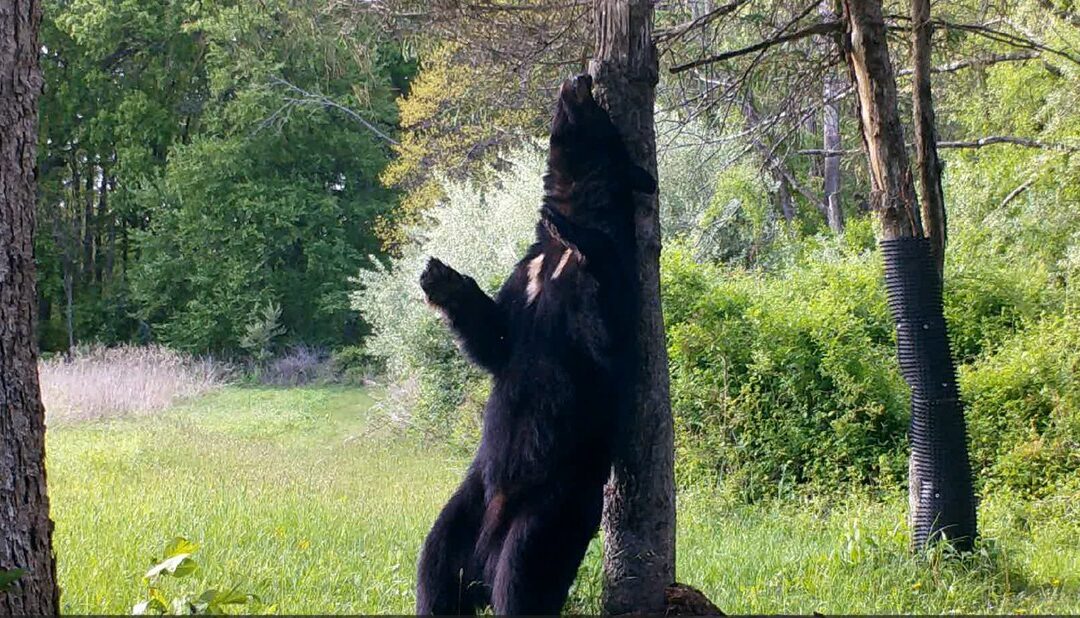
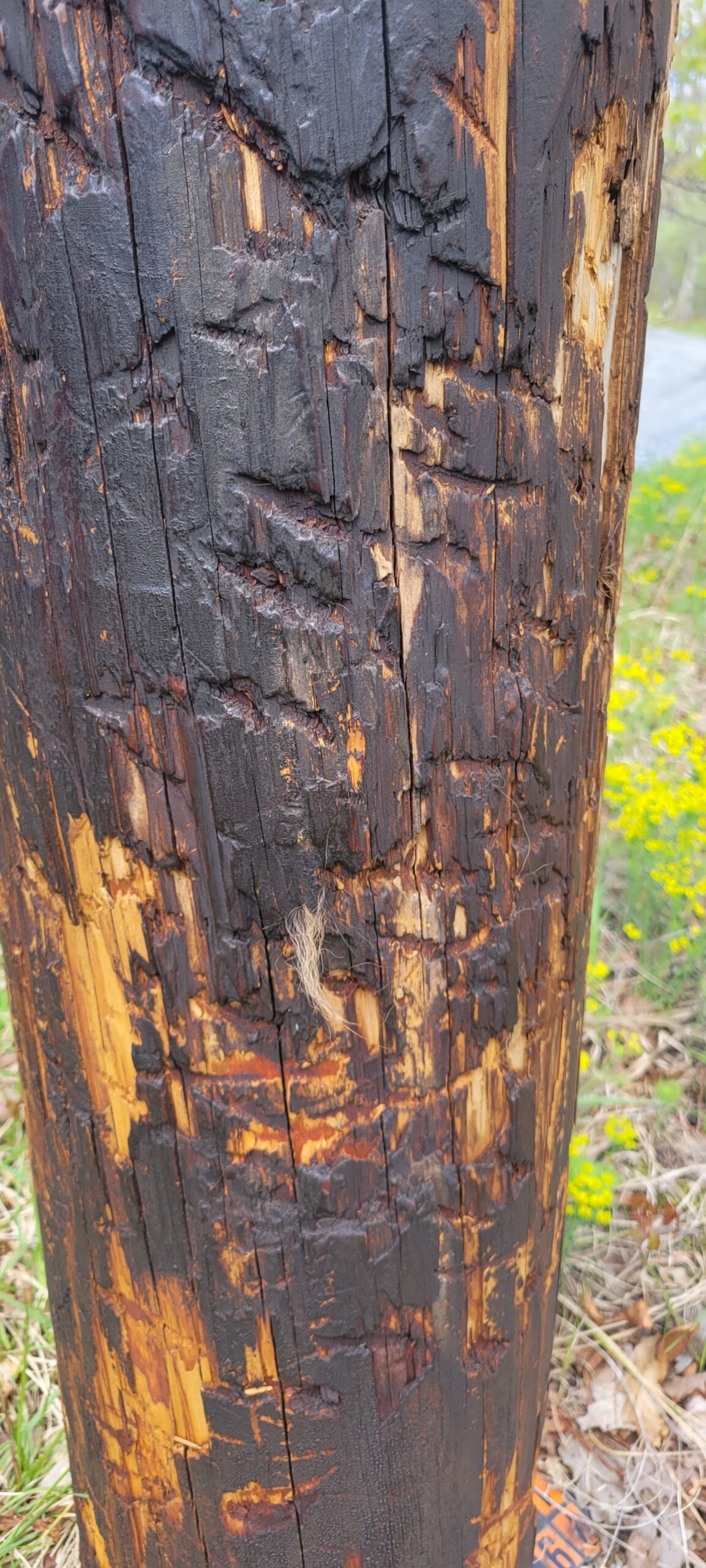
Utility Poles at MCR used by Bear for "Signaling" - look close for bear hair and claws marks
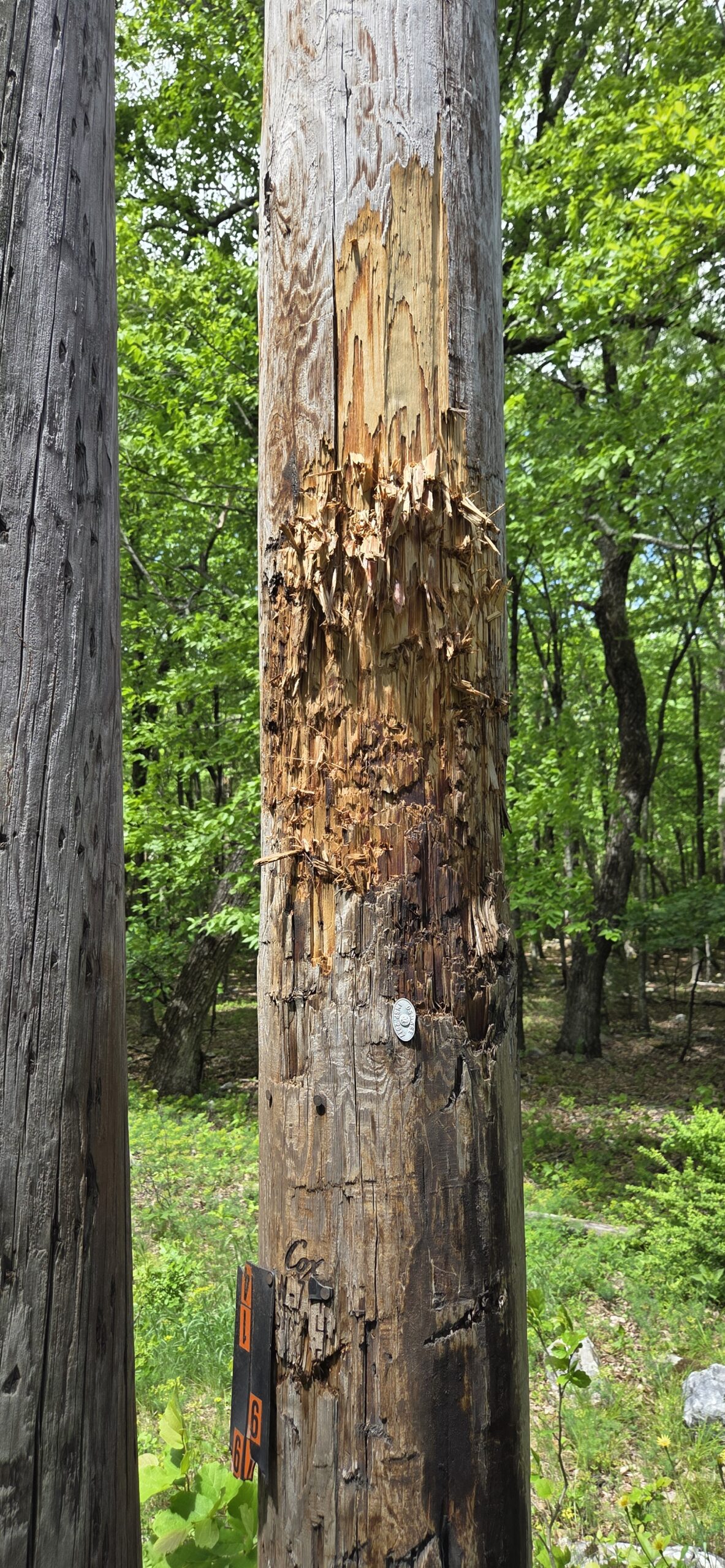 The next time when visiting Merrill Creek Reservoir notice the condition of the utility poles along Fox Farm Road and Richline Road. Many of the poles appear to have been “chopped” at and damaged about three to six feet above ground. On closer examination you will realize that many of these “chop” marks appear to be spaced into what looks like fingers. Also, even still closer examination of the wooden poles reveals black and brown hairs and hair balls wedged into the “chopped” wood.
What causes this damage you ask… it’s a bear!
According to the North American Bear Center, “Black bears (and other bears species) are often thought to be scratching their backs when observed standing up right while rubbing their back side against a tree trunk or other prominent object (like a utility pole) in their environment. In reality, they are not always scratching an itch. Mostly they are actually leaving scent messages for other bears. Black bears have scent glands all over their body. Some of these glands are concentrated in specific areas such as their paws and shoulder areas. When a black bear stands upright against a tree and begins to rub it's back against the tree/utility pole, it's leaving scent messages for other bears. These scratching and rubbing activities to leave scent is a vital form of communication — often called "signposting” messages can communicate many different things such as, territory boundaries, dominance, size, reproductive status, and even individual identity. Black bears also have an incredibly well adapted sense of smell. This helps them to distinguish and interpret the messages left by other bears on there “scratch-post.”
Other reasons why black bears engage in this scratching behavior on trees and utility poles include:
- Self-Medication and Grooming: Scratching helps bears shed their heavy winter coats. Additionally, rubbing releases saps and tree resins that stick to their fur, acting as a natural, water-resistant tick and insect repellent
- Itch Relief: Sometimes, an itch is just an itch! Bears will use rough bark or utility poles to scratch hard-to-reach spots on their backs
Because bears’ have an incredible sense of smell and not only it is important for finding food, but it also helps them keep track of each other. Bears generally have overlapping home ranges and they’re very interested in their neighbors.
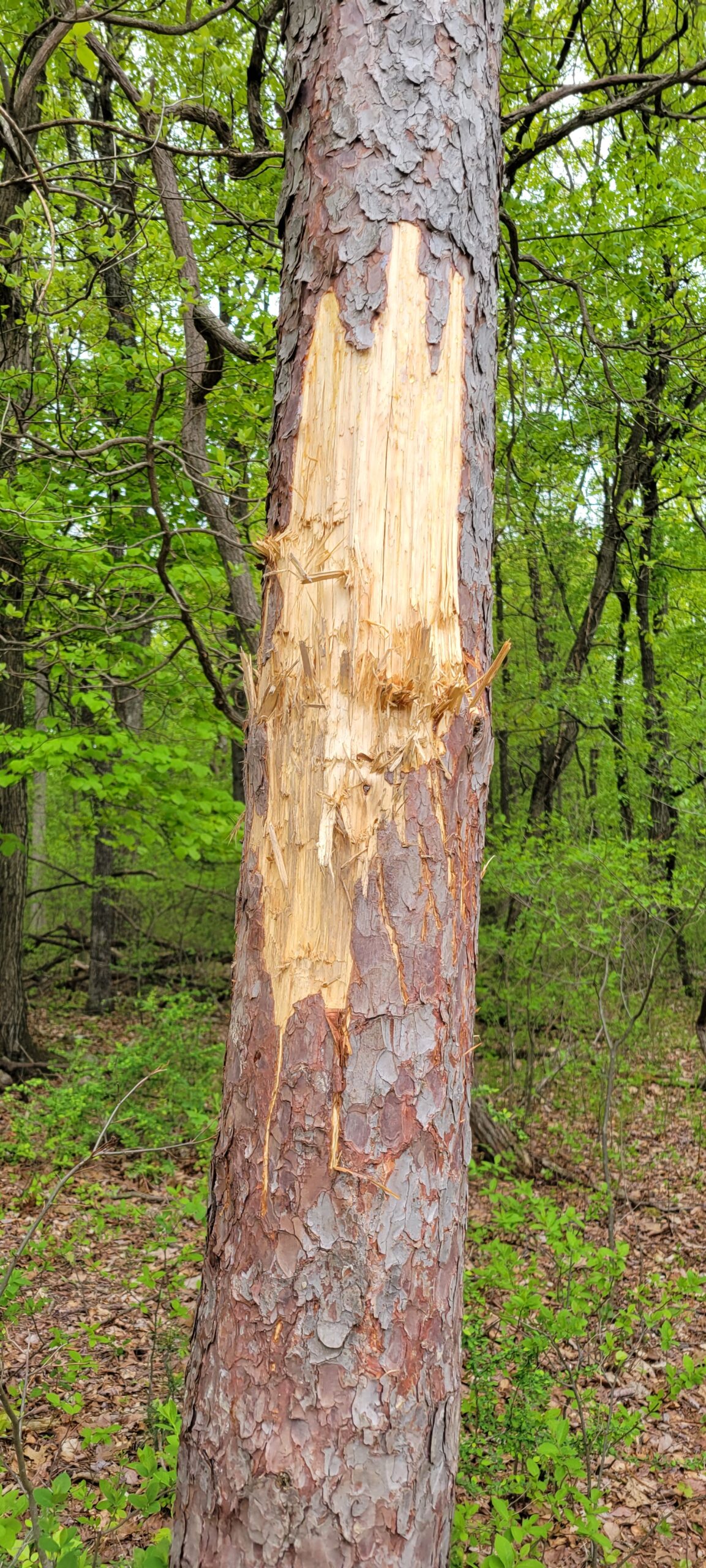
Pine Tree at MCR used by Bear for "Signaling"
Researchers are studying scent communication behavior in bears, also called chemical signaling. They’re learning that bears are very deliberate about where they place scent marks, how often they engage in marking behavior, and how much time and energy they invest in scent marking.